
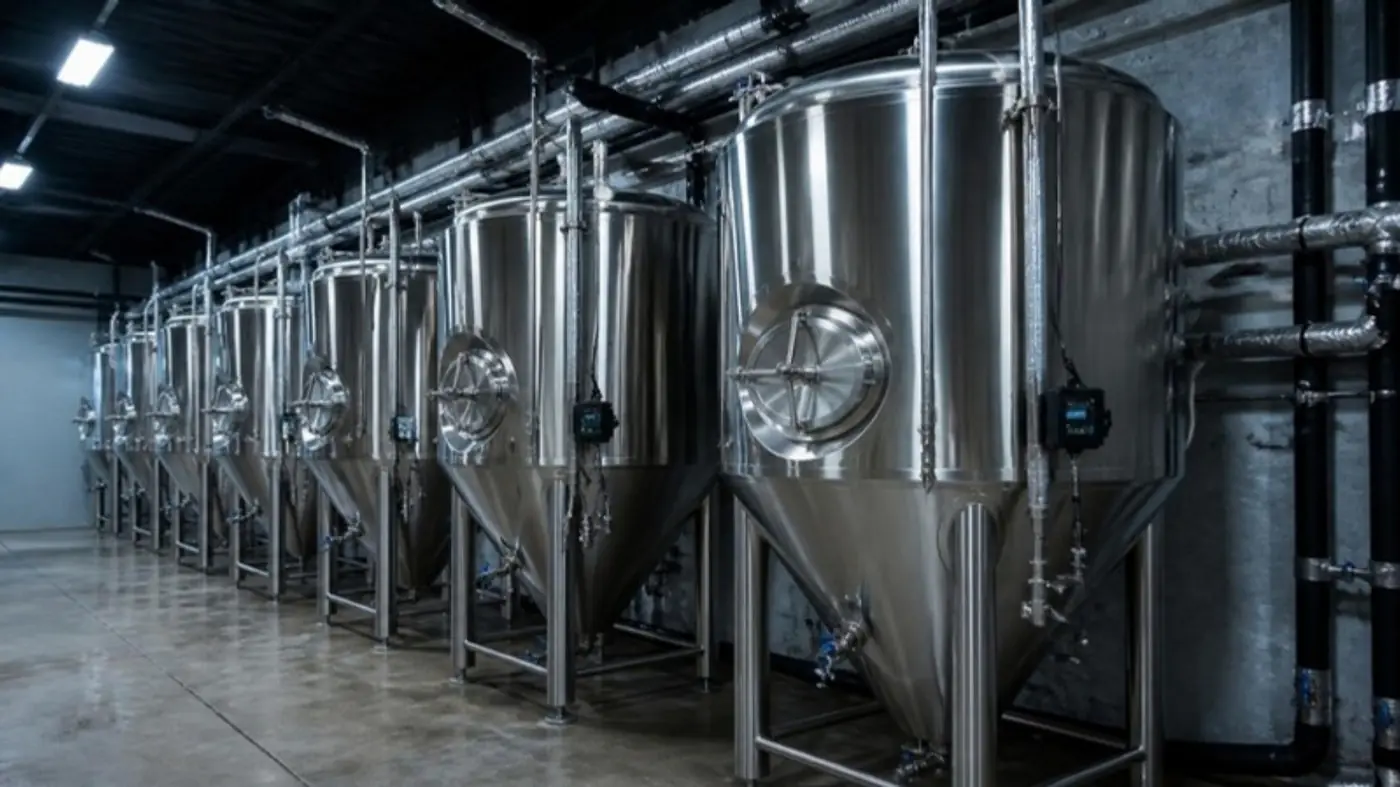
When your glycol chiller goes down, fermentation temperatures drift and a whole batch is at risk. We service, repair and install glycol chillers for breweries, wineries, cideries, kombucha makers and other beverage producers across the Lower Mainland and Fraser Valley.
A glycol system is simple on paper. The chiller cools a food-grade glycol mix, a pump sends it through insulated lines, and a valve on each tank opens when that tank calls for cooling. When any one of those parts slips, tanks drift off temperature and you find out when the beer or wine tastes wrong.
We work on packaged glycol chillers, pumps, heat exchangers, tank jacket valves and the controls that tie them together, from a two-tank brewpub to a full production cellar.
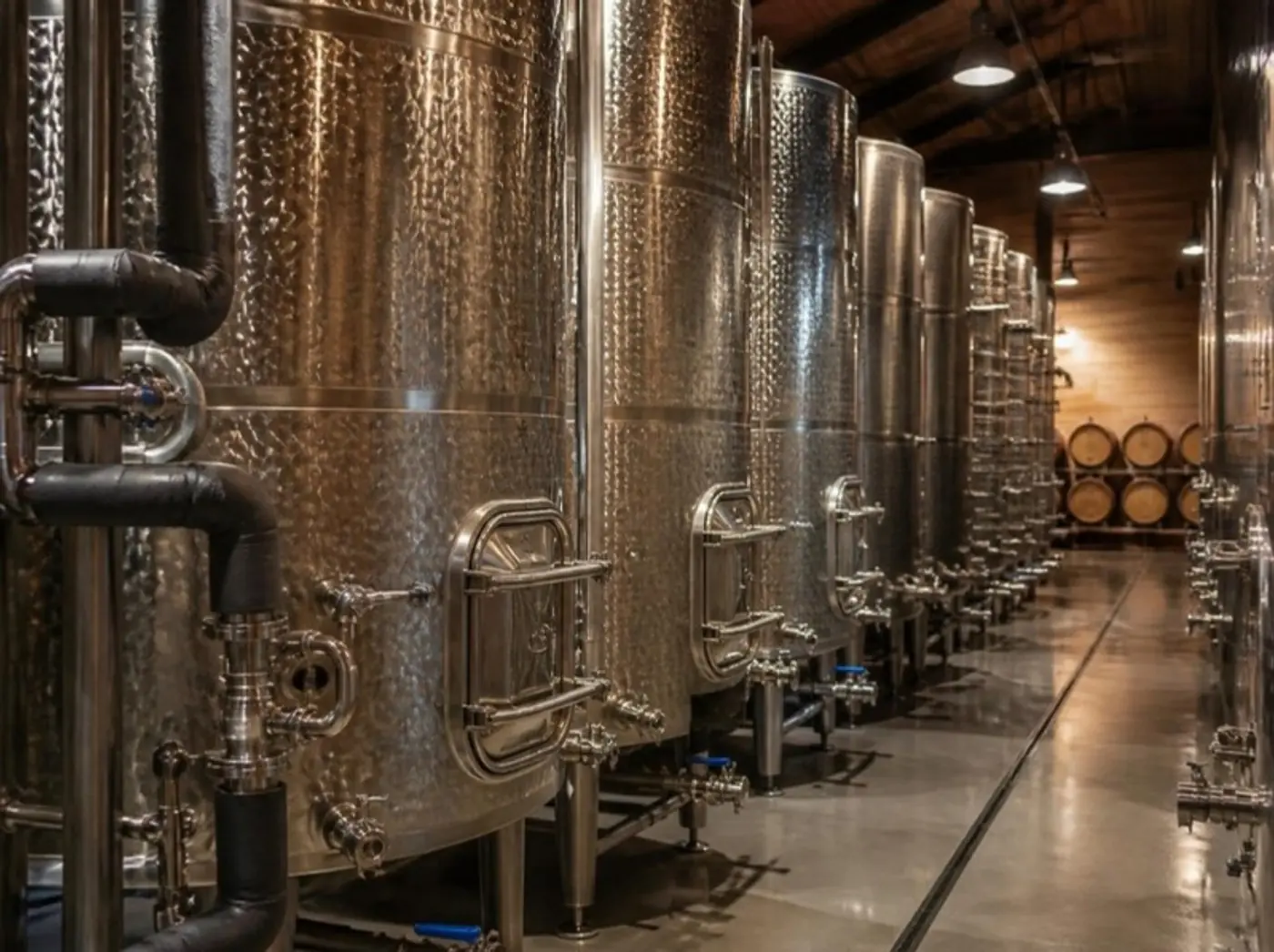
Every producer uses cooling differently. We set up and service your system around your process, not a generic checklist.
Steady fermentation temperatures, fast crash cooling, and brite tanks and cold liquor tanks that are ready when you need them.
Juice and must chilling at crush, cool fermentations for whites and rosé, and cold stabilization near freezing.
Controlled fermentation and cold conditioning so every batch tastes like the last one.
Tight temperature control through fermentation, then fast chilling to hold the finished product.
Process cooling for condensers, mash and fermentation, sized to your production schedule.
The same team services your walk-in coolers, keg rooms and ice machines, so one call covers the whole building.
Fermenters or brite tanks drift above set point.
The unit never reaches set point, or it short cycles.
The glycol level drops or the concentration is off, which risks freeze-ups.
High pressure, low pressure or flow alarms that keep coming back.
Noisy pumps, low flow or leaking seals.
Frost or ice build-up on the chiller barrel or plate exchanger.
A planned visit costs far less than a lost batch. We follow a checklist built for glycol systems and leave you a written report with anything that needs attention.
We test the freeze point, look for signs the inhibitors are breaking down, and adjust the mix.
Seals, bearings, pressures and strainers, so glycol reaches every tank at full flow.
Refrigerant pressures, superheat, compressor amps and oil, checked against how the chiller should run.
Coil cleaning and fan checks. A dirty condenser is the most common cause of lost capacity in summer.
Probes checked against a reference thermometer, set points reviewed and alarms tested.
Solenoid valves, jacket connections and pipe insulation, where hidden leaks and ice build-up start.
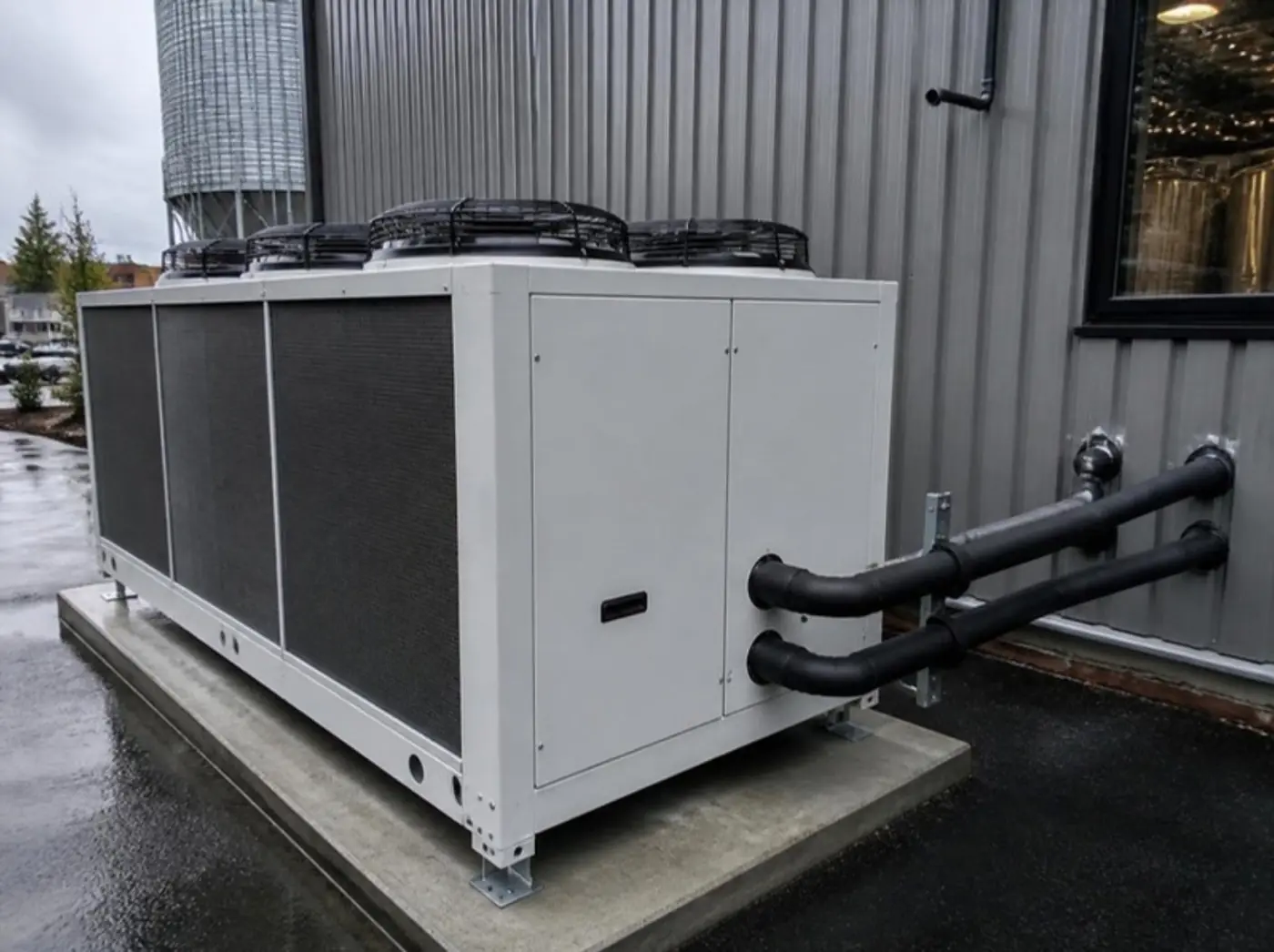
Adding fermenters or a second shift changes your cooling load, and a chiller that was right three years ago may be undersized now. We work out the load from your tanks, batch schedule and crash cooling, then size the chiller, pump and piping to match.
Since 2025, new chillers made in or imported into Canada must use refrigerants with a global warming potential of 750 or less. We walk you through the refrigerant options, with the price and efficiency of each.
Call (778) 874-2665. A technician can often talk you through a reset or a quick check while we are on the way.
Look at the glycol level, the breaker and the alarm on the controller. Reset once. If it trips again, leave it off so a small fault does not become a big one.
Close the cooling valves on tanks that can wait, and keep cold room doors shut, so every bit of cooling goes to active fermentations.
At least once a year, ideally before your busiest production season. Busy breweries and wineries often benefit from service twice a year, with one visit before crush or your summer peak.
Most breweries and wineries run food-grade propylene glycol, often around 30 to 35 percent, but the right strength depends on your lowest set point. We test the freeze point on every visit and adjust the mix for your process.
Propylene glycol is far less toxic, which matters anywhere a leak could come near your product. It is the standard choice for breweries, wineries and other beverage producers.
Yes. We work out the load from your tanks, batch schedule and crash cooling needs, then size the chiller, pump and piping to match, with room to grow.
It depends on how the system was sized. Crash cooling is the biggest load most breweries put on a chiller. If your tanks are slow to crash, staggering batches or adding capacity may help, and we can measure what your system delivers to tell you which.
We service most makes of packaged glycol chillers, pumps and controls. If a part has to be ordered, we tell you up front and give you options to keep production going.
Yes. We service producers across Metro Vancouver and the Fraser Valley, from Vancouver and Port Moody to Langley, Aldergrove and Abbotsford.
Yes. Call (778) 874-2665 any time. A warm fermenter cannot wait until Monday.
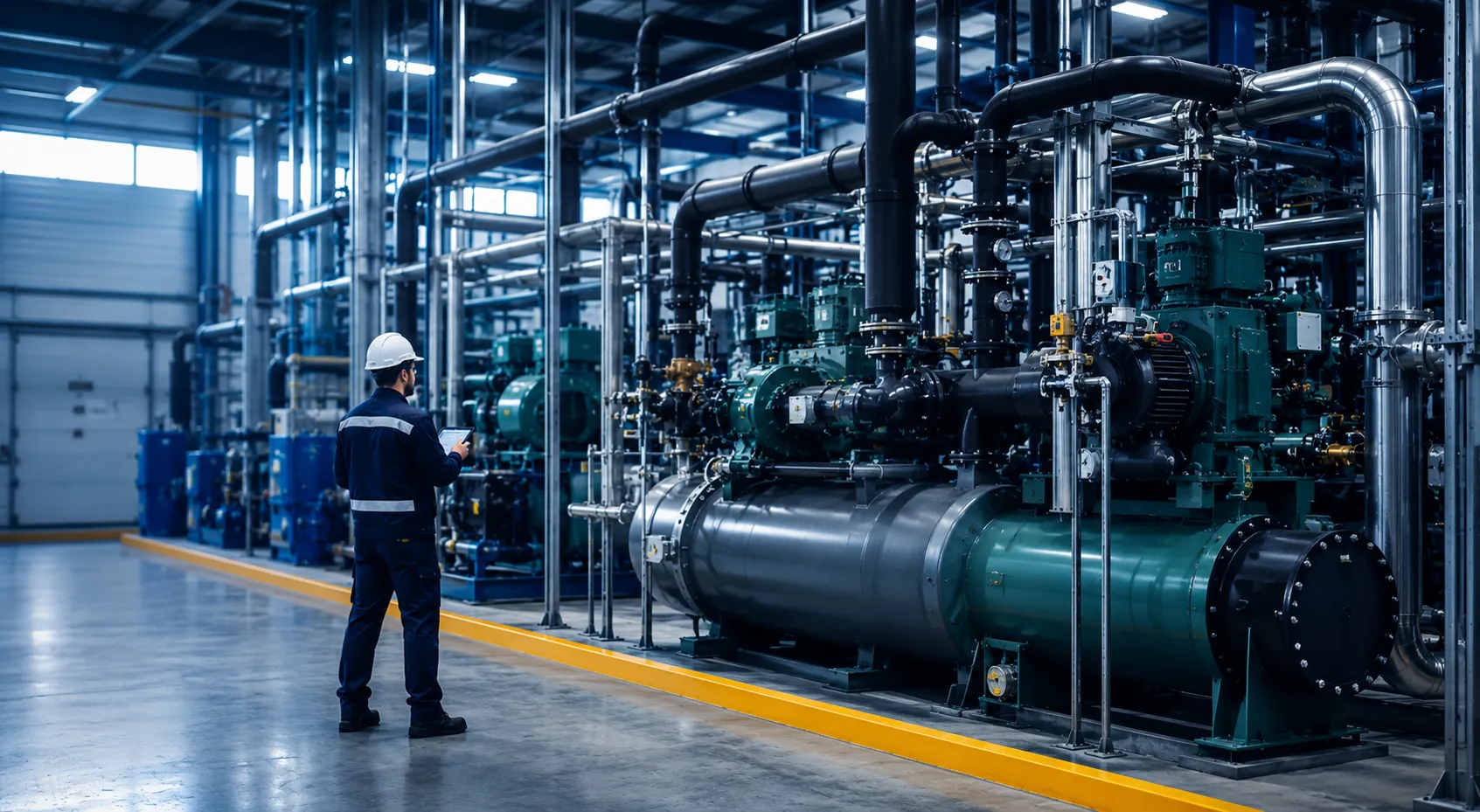
Call us any time, day or night. For quotes and non-urgent work, send a request and we will get back to you quickly.
Commercial and industrial refrigeration repair, installation and maintenance for Metro Vancouver, the Lower Mainland and the Fraser Valley. Emergency service 24/7. Office hours Monday to Friday, 8 AM to 4:30 PM.